
All-Weather Gallops for Racehorse Conditioning
Gradient, Drainage & Soil Engineering
All-weather gallops are the backbone of consistent racehorse conditioning - especially in the UK, where rain, clay soils and rolling terrain can quickly disrupt training. A well-designed gallop isn’t just a track; it’s an engineered system that balances performance, safety and year-round reliability.
This blog breaks down the core elements behind modern all-weather gallop design: gradients, drainage, and soil stabilisation.
Gradient: Building the Right Incline for Conditioning
The slope of a gallop influences how horses develop cardiovascular fitness and muscular strength. Designers typically use LiDAR surveys to map the land with high accuracy before shaping the track.
Ideal training gradient: 2-5% - enough to build stamina without overloading the joints.
Upper safe limit: Avoid slopes above 8%, which research in research in equine biomechanics links to increased musculoskeletal strain.
Gallop length: The BHS recommends 800-1600m, giving trainers enough distance for progressive conditioning.
A carefully planned gradient ensures horses work efficiently while reducing the risk of injury - a key requirement under the Animal Welfare Act 2006 and DEFRA’s welfare code.
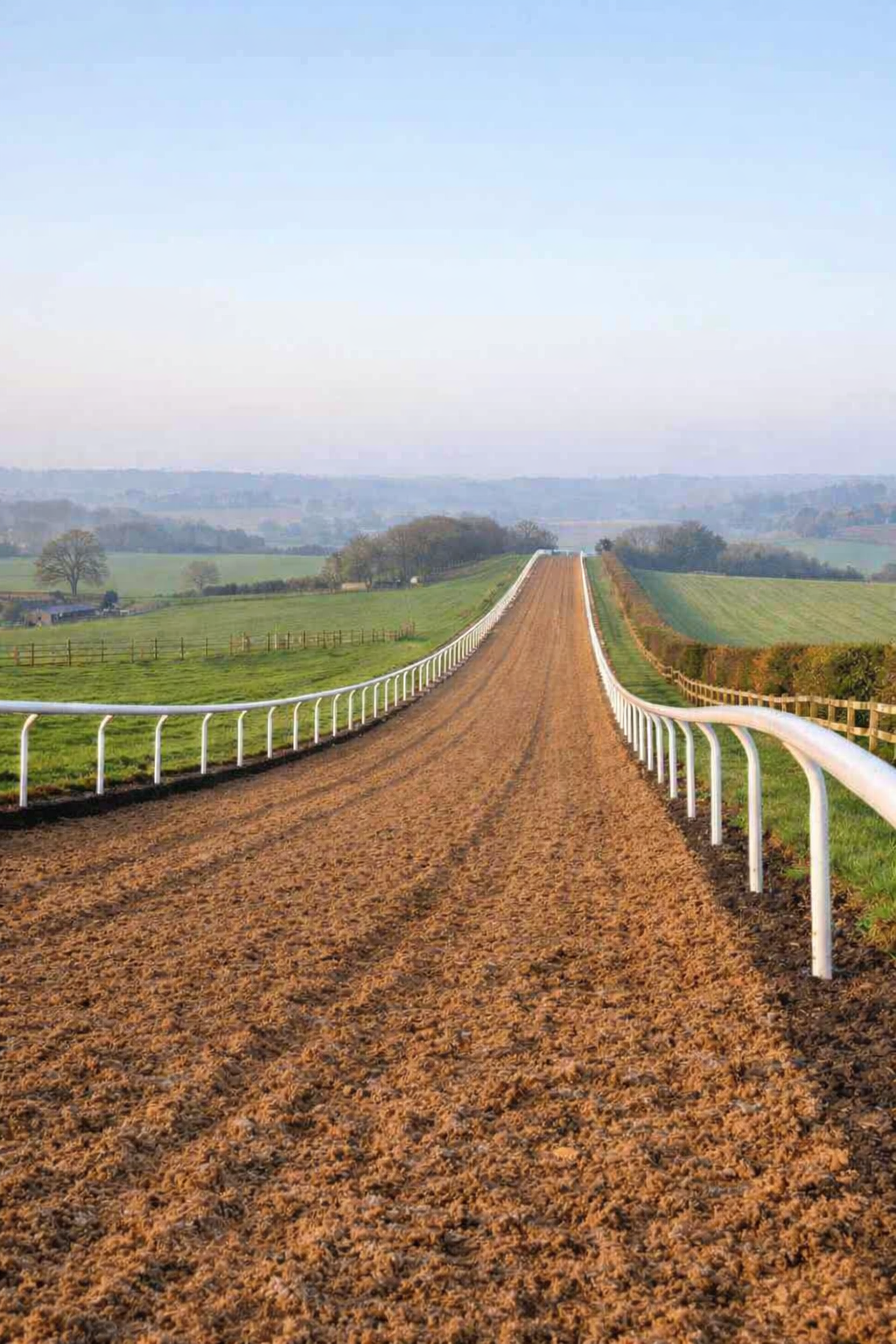
An image showing a sloping gradient on a gallop in the UK.
Drainage: Keeping the Track Rideable in All Weather
Drainage is the single biggest factor that determines whether a gallop stays usable through winter. Modern systems combine subsurface engineering with surface-water management.
Core Drainage Components
French drains with 100mm perforated pipes placed at roughly 5m intervals.
Gravel backfill to encourage fast water movement.
Percolation rates of around 50mm/hour, preventing waterlogging.
Swales and shallow ditches to manage surface runoff and reduce erosion.
These systems are designed to meet UK planning expectations, including Environmental Impact Assessments and compliance with the Water Resources Act 1991, ensuring runoff doesn’t pollute nearby watercourses.
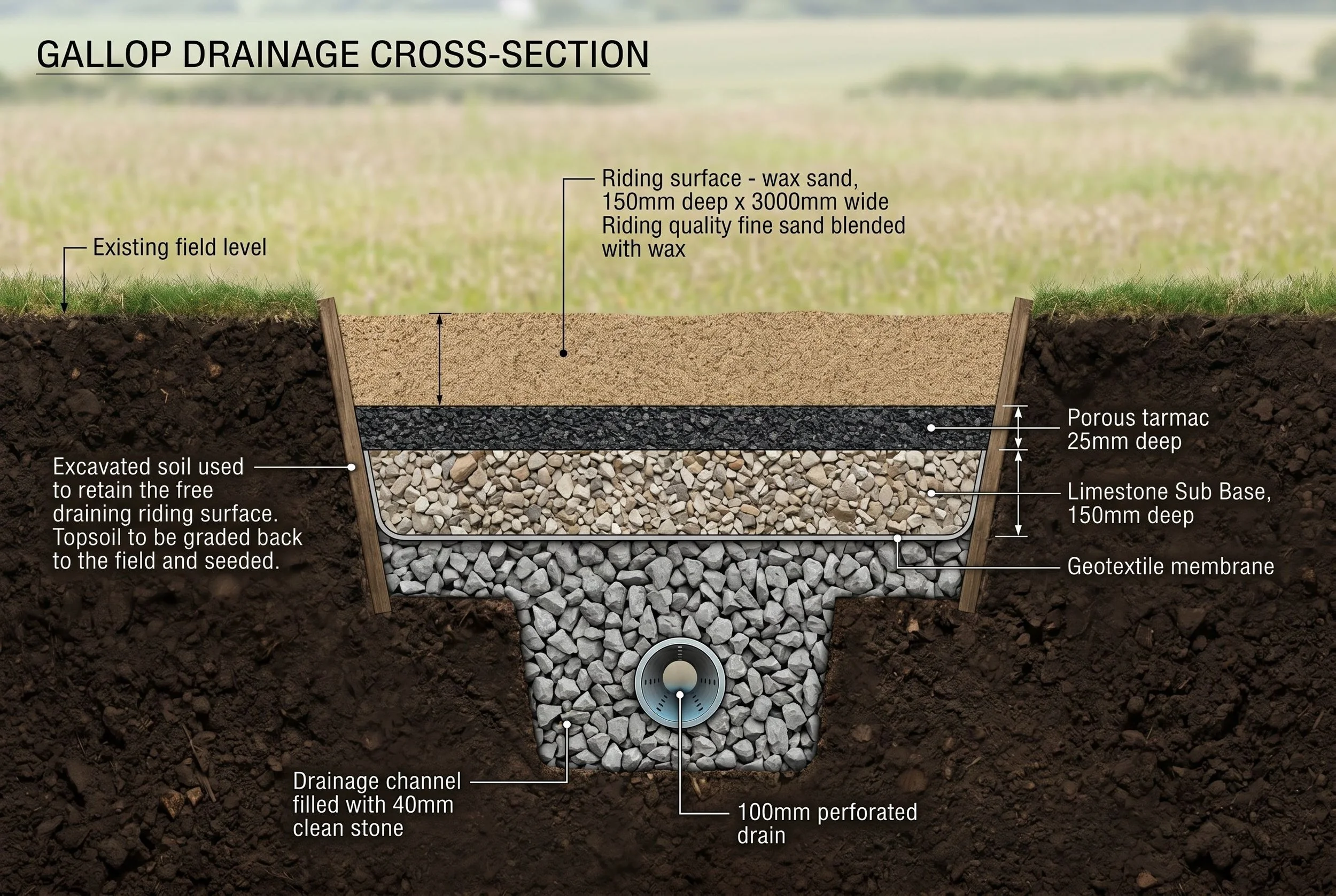
A CGI image showing the layers of material underneath the sand providing drainage for a gallop in the UK.
Soil Stabilisation: Creating a Strong, Resilient Base
Beneath the surface, the ground must be strong enough to support repeated galloping without rutting or compaction.
Common Stabilisation Methods
Lime or cement additives to increase ground strength.
Improved California Bearing Ration (CBR) values to 15-20%, suitable for heavy equestrian use.
Synthetic turf, fibre or woodchip surfaces added on top for cushioning and impact absorption(>30%).
To maintain consistency, many facilities use soil moisture probes and subsurface irrigation to keep moisture levels around 20-25%, preventing compaction from exceeding 1.5MPa - a threshold linked to reduced surface performance.
Welfare, Planning & Environmental Considerations
Designing a gallop isn’t just about engineering - it must also meet welfare and environmental standards.
Animal Welfare Act 2006 and DEFRA codes emphasise injury prevention and safe footing.
Regular veterinary inspections are recommended for high-use training facilities.
Town and Country Planning Regulations require environmental assessments for new gallops, particularly where drainage or landscape changes are involved.
These frameworks ensure gallops support both equine wellbeing and responsible land management.
To conclude:
A high-quality all weather gallop is the result of thoughtful engineering: the right gradient, robust drainage, and a stable, cushioned surface. When designed well, these systems give UK trainers reliable, year-round conditioning environments that enhance performance while protecting horses and the landscape.
As environmental expectations rise and training demands evolve, these technical principles will continue shaping the next generation of resilient equestrian infrastructure.