
Mastering the Arena
Technical Specifications for Indoor and Outdoor Riding Arenas
Designing and constructing a high performance riding arena - whether indoor or outdoor - demands far more than choosing a surface and erecting a fence. In the UK, where rainfall, soil, variability and planning constraints all influence long-term performance, the technical specification beneath and around the arena is what ultimately determines its usability, safety, and lifespan.
This post explores the essential engineering considerations behind a well-designed arena, from ground preparation to structural design, drainage, and discipline-specific layouts.
Site Selection and Ground Preparation
Every successful arena begins with a through understanding of the land it sits on. Key factors include:
Soil Conditions - clay soils require more robust drainage and deeper stone layers, while sandy or free-draining soils may allow for a lighter build-up.
Topography - natural slope influences how water moves across and beneath the arena. A gentle fall (typically 1:100-1:200) helps direct water towards drainage channels without affecting rideability.
Compaction and Stability- the formation layer must be firm, level and well-compacted to prevent future settlement. Any soft spots should be excavated and replaced with suitable fill.
A well-prepared site ensures the arena remains stable under load, drains efficiently, and resists deformation over time.
Sub-Base and Drainage Layers
The sub-base is the structural backbone of the arena. It must be engineered to withstand constant impact, weather exposure, and the lateral forces created by horses working at speed.
Typical UK arena build-up includes -
Geotextile membrane - prevents the mitigation of fines, stabilises the formation, and protects the drainage system.
Crushed concrete or clean angular stone - laid in layers, rolled and compacted to create a stable, free-draining platform.
Drainage system:
Perimeter drains or ring drains to capture water around the arena.
Lateral drains or herringbone systems beneath the surface to move water quickly.
Discharge to soakaways, ditches, or attenuation systems depending on site conditions and planning requirements.
Effective drainage is the single most important factor ensuring year-round usability. Poor drainage leads to surface instability, frost damage, and costly remediation.
Structural Design for Indoor Arenas
Indoor arenas introduce an additional layer of engineering complexity. The structure must provide clear spans, natural light, ventilation, and weather protection while remaining cost-effective.
Common UK structural solutions include:
Steel-framed buildings - manufactured to bespoke dimensions, offering durability and large clear spans ideal for equestrian use.
Roofing options:
Fibre cement sheets with 15-20% clear Perspex panels for natural light.
40mm composite insulated panels for improved thermal performance and reduced condensation.
PVC tension membrane roofs for a cost-effective, bright, naturally lit environment.
Ventilation and daylighting :
Clear sheets on gable ends
Open sides above kickboards
Ridge vents or louvres for airflow
These features create a comfortable, safe training environment while reducing reliance on artificial lighting.
Arena Dimensions and Layouts
Arena size is dictated by discipline, available space, and intended use.
Typical UK dimensions:
Dressage:
20mx40m (standard)
20mx60m (advanced)
Showjumping:
Often wider, e.g. 30mx60m for training and competition
Larger outdoor arenas allow for more varied course design
Multi-discipline layouts may include:
Viewing galleries
Judge’s boxes
Storage for equipment
Office or lounge areas
Safe access routes for horses and vehicles
A well-planned layout supports efficient yard operations and enhances rider experience.
Kickboards and Fencing
Safety and durability are paramount in both indoor and outdoor arenas.
Indoor kickboards:
Protect horses and riders from contact with the building frame.
Typically constructed from treated timber, recycled plastic, or impact-resistant composite materials.
Installed at a slight angle to deflect impact.
Outdoor fencing options:
Post and rail - traditional robust, and visually appealing.
Wire stock fencing - cost-effective for larger arenas or multi-use spaces.
Permanent electric fencing - useful for keeping horses off the perimeter without obstructing views.
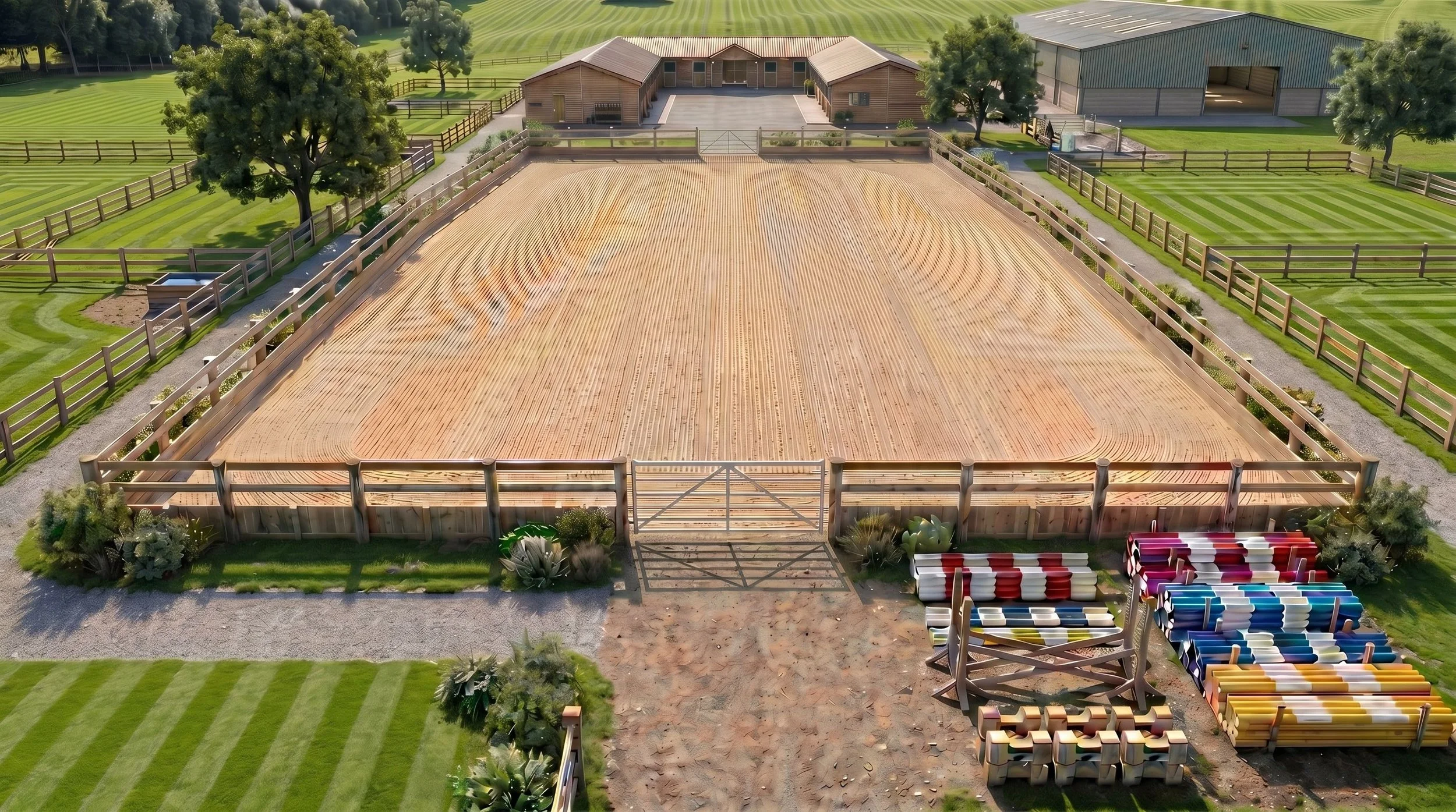
A CGI Example of an Outdoor Arena with Post and Rail Fencing.
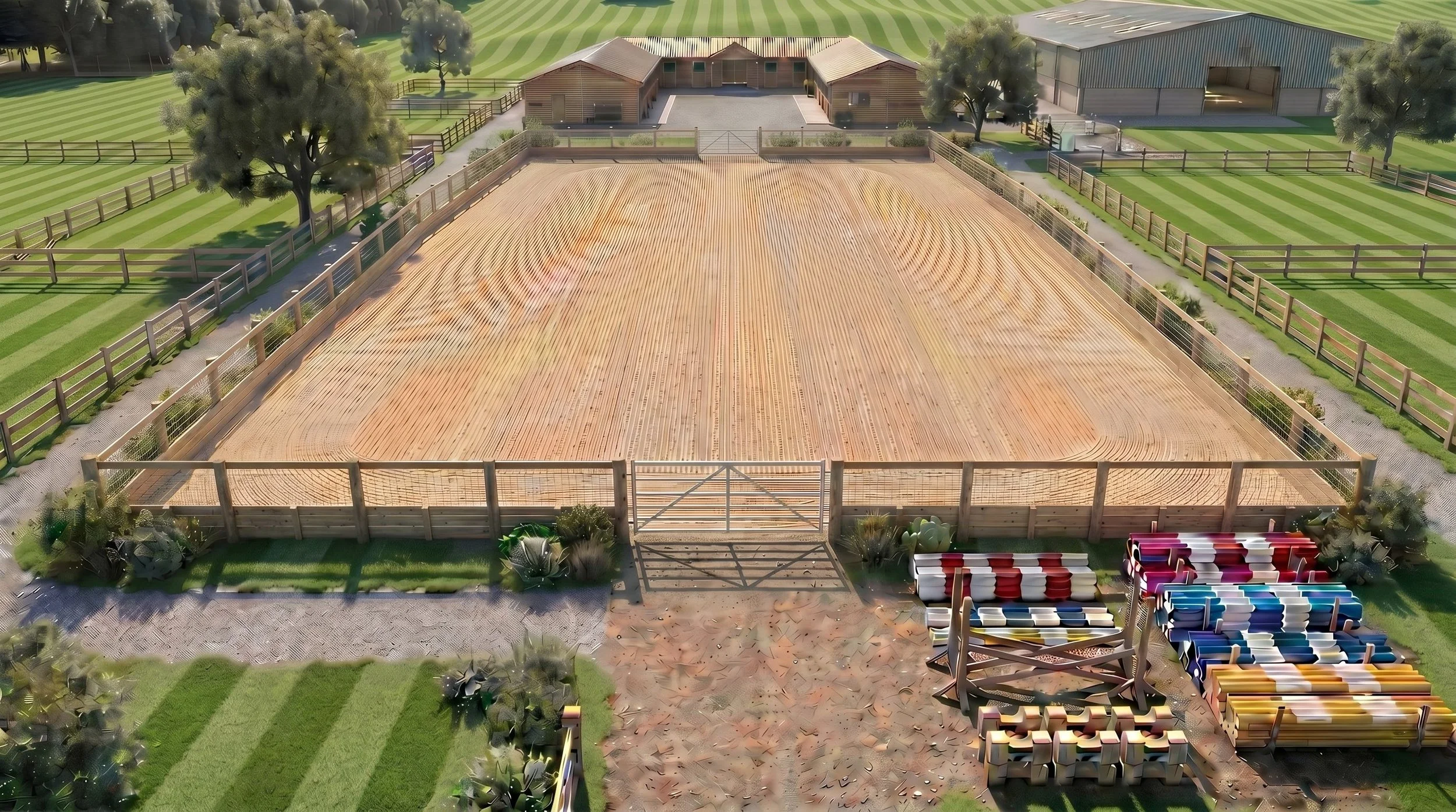
A CGI Example of an Outdoor Arena with Stock Fencing.
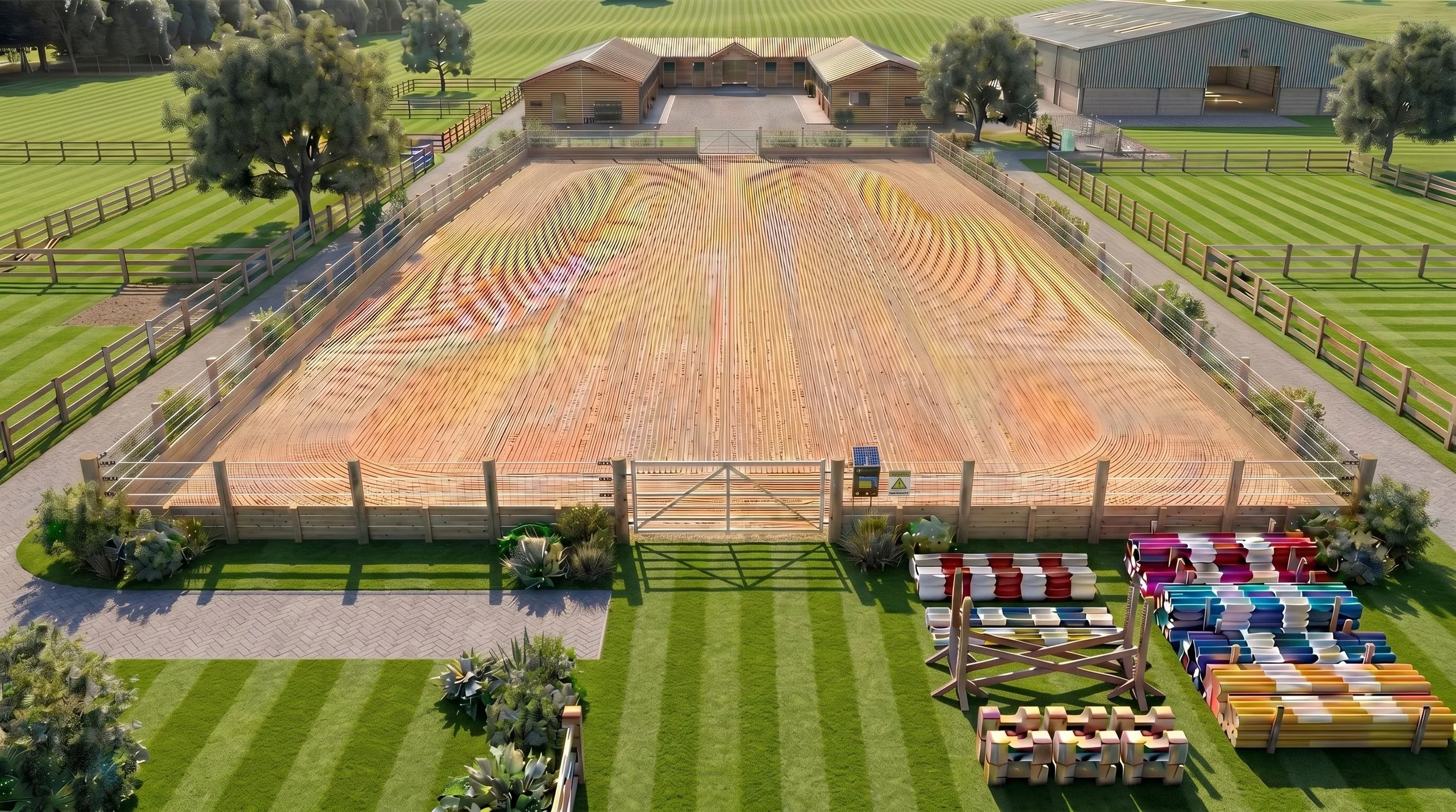
A CGI Example of an Outdoor Arena with Permanent Electric Fencing.
The choice depends on discipline, budget, and the level of containment required.
To conclude:
Constructing an indoor or outdoor arena is a technical process that demands precision at every stage - from ground preparation and drainage design to structural engineering and final surfacing. By adhering to rigorous standards in sub-base construction, selecting appropriate materials, and tailoring the arena to its intended discipline, designers and builders can deliver facilities that offer consistent performance, enhanced safety, and reliable year-round use.
A well-engineered arena is more than a training space; it is a long term investment in horse welfare, rider development, and the operational efficiency of any equestrian facility.